


Imagine getting world-class medical training while serving your country and earning a steady paycheck from day one. Navy healthcare careers offer exactly that, combining hands-on medical experience with military service to create opportunities you won’t find in civilian hospitals. Whether you’re just starting out or looking to switch careers, understanding what Navy medicine offers can open doors you didn’t know existed.
Table of Contents
Understanding Navy Medical Structure
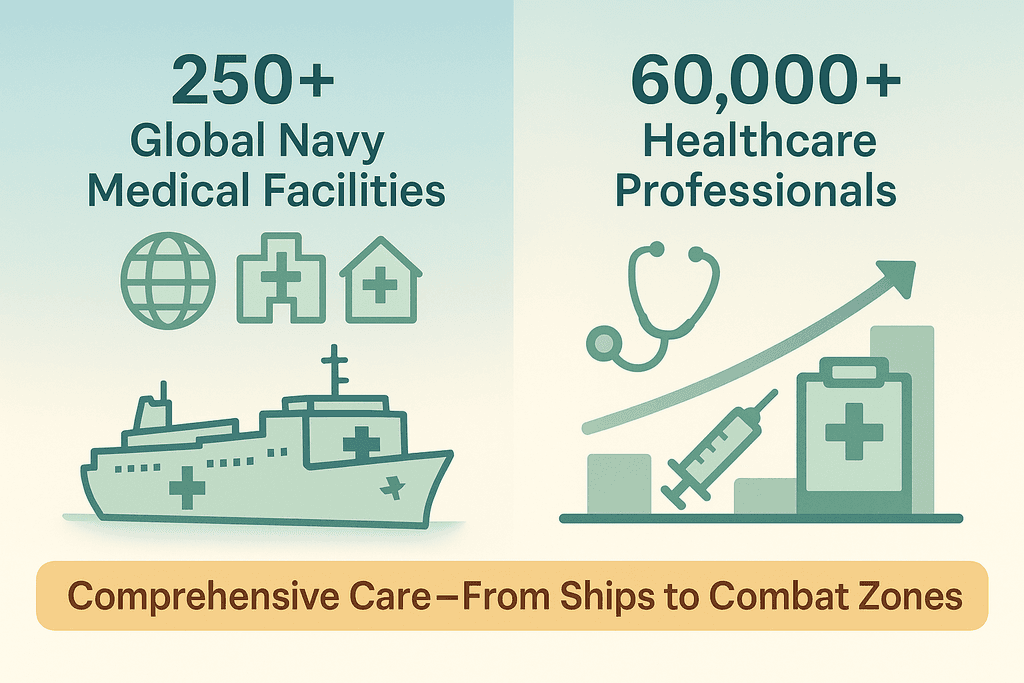
The Navy Medical Department has been taking care of sailors and Marines since 1798, making it one of the oldest healthcare systems in America. Today, it operates over 250 medical facilities worldwide and employs more than 60,000 people in various healthcare roles. Navy Medicine handles everything from routine checkups on ships to emergency surgeries in combat zones, and it’s always looking for new people to join the team. The system works differently than civilian hospitals, but many of the skills you learn can transfer between both worlds.
What Navy Medicine Does
Navy Medicine’s main job is keeping military members healthy and ready to serve. This means providing medical care in some pretty unusual places, like submarines, aircraft carriers, and remote military bases. The department also supports families of service members and retirees through military treatment facilities across the country.
The mission breaks down into several key areas:
- Providing medical care during peacetime and combat operations
- Running hospitals and clinics on military bases
- Training medical personnel for deployment
- Conducting medical research for military and civilian use
- Supporting humanitarian missions around the world
Different Paths in Navy Healthcare
Navy healthcare isn’t just doctors and nurses. There are dozens of different jobs, from dental technicians to pharmacy specialists to operating room techs. Hospital Corpsmen (HM) make up the largest group, serving as the backbone of Navy medical care both on ships and on land.
The main branches within Navy healthcare include:
- Medical Corps (doctors and surgeons)
- Nurse Corps (registered nurses and nurse practitioners)
- Medical Service Corps (healthcare administrators and specialists)
- Dental Corps (dentists and oral surgeons)
- Hospital Corpsman (enlisted medical technicians)
Navy vs Civilian Healthcare Careers
Choosing between Navy healthcare and civilian medicine is a big decision. Both paths offer rewarding careers, but they work very differently. In the Navy, you get paid training, guaranteed job placement, and benefits that start on day one. Civilian healthcare often requires expensive schooling first, and you have to find your own job afterward.
Here’s how the two paths compare:
| Factor | Navy Healthcare | Civilian Healthcare |
|---|---|---|
| Training Cost | Free (you get paid to learn) | $5,000-$50,000+ in tuition |
| Job Guarantee | Guaranteed placement after training | Must apply and compete for positions |
| Starting Pay | $25,000-$35,000 plus benefits | $28,000-$40,000 (no benefits initially) |
| Healthcare Benefits | Free medical and dental from day one | Often wait 90 days, pay premiums |
| Work Environment | Ships, bases, field hospitals | Hospitals, clinics, private practices |
| Advancement | Structured rank progression | Based on experience and job changes |
| Commitment | 4-6 year contracts | No required commitment |
The Navy also offers something civilian jobs can’t match: the chance to serve your country while building a medical career. You might deploy to help with disaster relief, work on a ship crossing the Pacific, or support Marines in training exercises.
Growing Demand for Navy Medical Personnel
The Navy needs more healthcare workers now than it has in years. With an aging fleet and expanding global operations, medical positions are opening up faster than they can fill them. This means better signing bonuses, quicker advancement opportunities, and more choices about where you want to work.
Current trends show:
- Over 1,000 Hospital Corpsman positions open annually
- Increased need for mental health specialists
- Growing demand for surgical technicians and emergency medical personnel
- Expansion of medical facilities at key naval bases
At My Health Bowl, we track these career opportunities and provide up-to-date information about military healthcare paths. The demand isn’t slowing down anytime soon, which makes now a smart time to consider this career path.
Hospital Corpsman: The Foundation Role
The Navy Hospital Corpsman rating is where most people start their healthcare journey in the military. These are the folks who do everything from giving shots and checking vital signs to providing emergency care on the battlefield. Hospital Corpsmen work alongside doctors and nurses, but they also handle a lot of independent medical tasks that would surprise most people. The role is incredibly diverse, which means no two days look exactly the same. You might be working in a clinic one week and training with Marines in the field the next. It’s this variety that makes the HM rating one of the most popular choices for people entering Navy healthcare.
Hospital Corpsman: The Foundation Role
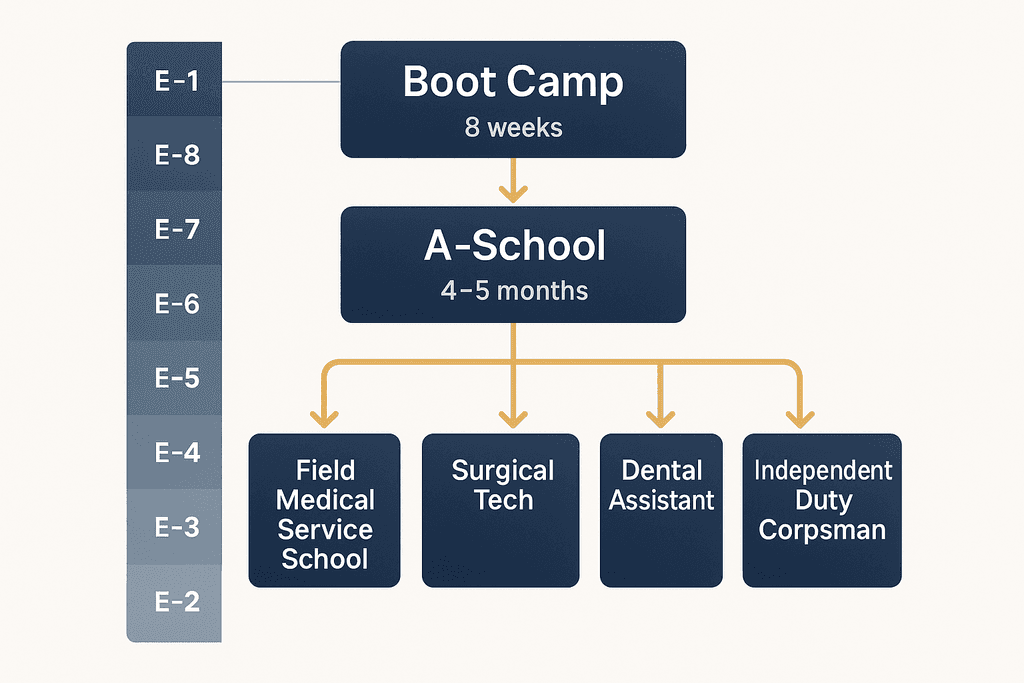
After you finish boot camp, you’ll head to A-School at Fort Sam Houston in Texas. The training lasts about four months and covers basic medical skills like wound care, pharmacology, patient assessment, and emergency procedures. This is where you learn the fundamentals that will carry you through your entire career, whether you stay in for four years or twenty.
Specialized Fields Within HM
- Field Medical Service Technician (FMST) – Work directly with Marine Corps units in combat and training environments
- Dental Technician – Assist Navy dentists with procedures and patient care
- Surgical Technician – Support operating room procedures on ships and at medical facilities
- Preventive Medicine Technician – Focus on public health and disease prevention
- Aerospace Medical Technician – Support aviation units and flight crews
- Independent Duty Corpsman – Provide advanced care in remote locations with minimal supervision
Career advancement follows the standard Navy enlisted structure, starting at E-1 and moving up through the ranks. Most Hospital Corpsmen make it to Petty Officer Third Class (E-4) within their first enlistment, and from there the path opens up based on your performance and specialty. The higher you climb, the more leadership responsibilities you take on, eventually managing entire medical departments or training facilities.
Duty stations range from hospitals in San Diego to small clinics on remote islands to forward operating bases in challenging environments. Some Corpsmen spend their entire careers stateside, while others deploy regularly with Marine units or aboard ships. The choice often depends on which specialty you pursue and what opportunities come up during your career.
Officer Healthcare Positions
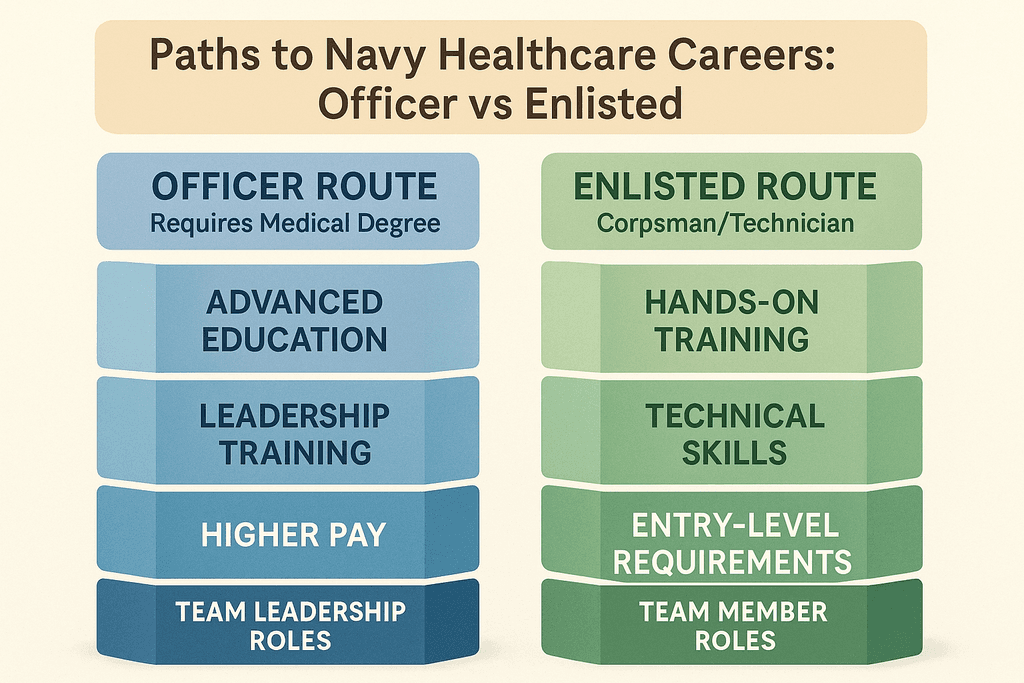
If you already have a medical degree or you’re working toward one, the officer route might be your path into Navy healthcare. These positions require more education upfront, but they come with higher pay and different responsibilities. Officers lead medical teams rather than working as part of them, though plenty of hands-on patient care still happens depending on your specialty. The Navy needs doctors, nurses, dentists, and healthcare administrators just like any major hospital system. What makes it different is where you might end up practicing medicine.
Officer Healthcare Positions
Medical Corps officers are physicians who have completed medical school and often residency training. The Navy offers positions in almost every specialty you can think of, from family medicine and emergency medicine to surgery and psychiatry. These doctors work at major medical centers like Naval Hospital Camp Pendleton or aboard aircraft carriers providing care to thousands of sailors.
Healthcare Officer Corps Comparison
| Corps | Education Required | Primary Role | Typical Duty Stations |
|---|---|---|---|
| Medical Corps | MD or DO degree | Physicians and surgeons | Hospitals, ships, operational units |
| Nurse Corps | BSN or higher | Registered nurses and nurse practitioners | Hospitals, clinics, ships |
| Dental Corps | DDS or DMD degree | Dentists and oral surgeons | Dental clinics, hospitals |
| Medical Service Corps | Bachelor’s or Master’s | Healthcare administrators, pharmacists, therapists | Hospitals, administrative commands |
The Nurse Corps accepts registered nurses with at least a Bachelor of Science in Nursing. Career paths include everything from bedside nursing to becoming a Nurse Anesthetist or Nurse Practitioner, with the Navy paying for much of that advanced training. Dental Corps officers handle oral health for the entire fleet, while Medical Service Corps covers the behind-the-scenes roles that keep healthcare systems running smoothly.
Financial assistance programs make these positions more accessible than you might think. The Health Professions Scholarship Program (HPSP) pays for medical or dental school in exchange for service time after graduation. Student loan repayment programs can knock out existing debt for nurses and other healthcare professionals who join. At My Health Bowl, we cover these programs in detail to help you understand which options fit your situation best.
Training, Benefits, and Career Growth
The training doesn’t stop after your initial schooling. Navy healthcare professionals get continuous education throughout their careers, often at no cost to them. This includes everything from basic skill refreshers to advanced certifications that would cost thousands of dollars in the civilian world. The Navy also supports professional licenses and certifications, making sure you stay current with civilian standards. That matters a lot if you ever decide to transition back to civilian healthcare, because your Navy experience translates directly into marketable credentials.
Compensation in Navy healthcare depends on your rank and specialty, but it includes more than just base pay. Housing allowances cover your rent or mortgage, and healthcare for you and your family costs nothing out of pocket. Special pay bonuses exist for certain high-demand fields like nursing and surgery.
Key Benefit Highlights
- Zero-cost healthcare coverage for service members and dependents
- Housing allowances that adjust based on local cost of living
- 30 days of paid vacation annually
- Tuition assistance for continuing education
- Retirement pension after 20 years of service
- VA healthcare access for life after service
The retirement benefits deserve special attention. Serve for 20 years and you receive a pension for the rest of your life, starting immediately after you retire. That’s rare in today’s job market, where most people work until their sixties or seventies before seeing retirement income. Many Navy healthcare professionals retire in their early forties and start second careers in civilian medicine, essentially drawing two incomes.
Career transitions to civilian healthcare happen smoothly because the training and experience align so closely. Hospitals and clinics actively recruit former Navy medical personnel, knowing they bring discipline, advanced skills, and real-world experience that’s hard to find elsewhere. The connections you make and the reputation you build during your service open doors that might otherwise stay closed.
Your Path Forward in Navy Medicine
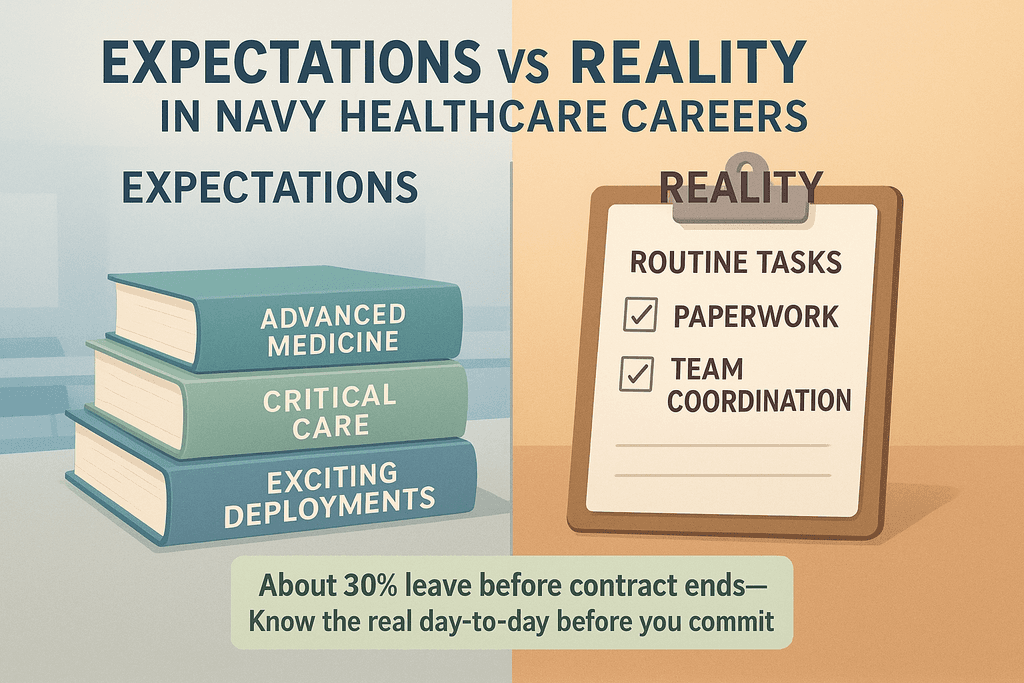
Starting a career in Navy healthcare gives you several solid options to consider. You can become a Hospital Corpsman and work directly with patients, train as a dental technician, pursue nursing through officer programs, or even go to medical school with the Navy’s help. Each path has different requirements and timelines, but they all offer the same core benefits like steady pay, free healthcare, education money, and real job security that’s hard to find elsewhere.
The biggest draws are probably the hands-on training you get right away and the chance to work in places most people never see. You’re not just reading about medical procedures in a textbook for years before touching a patient. Plus, the retirement benefits kick in after 20 years, which means you could start a second career while still collecting a pension.
If you’re seriously thinking about this, your next step is talking to a Navy recruiter who specializes in healthcare positions. They can walk you through the ASVAB requirements and what’s actually available right now. Some positions fill up fast, so timing matters more than people realize.
My Health Bowl covers military healthcare careers in detail, including breakdowns of specific Navy medical roles and what daily life actually looks like in these positions. We keep our content updated with current requirements and real experiences from people who’ve been through the process, so you’re not just getting the recruiting brochure version of things.
The questions people ask most often about Navy healthcare careers come up again and again, so let’s tackle those next.
Common Questions About Navy Healthcare Careers
Thinking about joining Navy healthcare but have some questions? You’re not alone. Most people considering this career path wonder about the same things, from training requirements to what life actually looks like in uniform. Here are the answers to the questions we hear most often from people exploring Navy medical careers.
Do I need medical experience before joining?
No, you don’t need any medical background to start a career as a Navy Hospital Corpsman or in other healthcare roles. The Navy provides all the training you need from scratch, starting with basic medical education at their training facilities. If you do have prior medical experience or certifications, that can sometimes help you advance faster or qualify for specialized positions.
How long is the service commitment?
Most enlisted Navy healthcare positions require an initial commitment of four to six years of active duty service. Officers who attend medical school through Navy programs typically owe seven to nine years depending on their specialty. The exact length depends on your specific role and any special training programs you complete, but you’ll know your commitment before you sign anything.
Can I choose my duty station?
You can express preferences for where you’d like to be stationed, but the Navy makes final assignments based on their needs. Some locations are more competitive than others, and your specialty, rank, and timing all play a role. Many Navy healthcare professionals serve at hospitals in San Diego, Portsmouth, or Bethesda, while others deploy with Marine units or aboard ships.
What happens if I want to leave the Navy?
Once you complete your service commitment, you can transition to civilian life with all the medical training and certifications you earned. Many former Navy medical personnel find jobs at civilian hospitals or continue their education using GI Bill benefits. The skills you learn translate directly to civilian healthcare careers, and employers often value military medical experience.
How does Navy medical training compare to civilian programs?
Navy medical training is intense and comprehensive, often condensed into shorter timeframes than civilian programs. Hospital Corpsman training covers a wide range of skills in about five months, while civilian EMT or nursing assistant programs might take similar time but cover less material. The hands-on experience you get in the Navy often exceeds what civilian students receive, especially in emergency and trauma care.
Can I have a family while serving in Navy healthcare?
Yes, many Navy healthcare professionals are married with children. The Navy provides housing allowances, healthcare for dependents, and support services for military families. Deployments and duty station changes can be challenging for families, but resources like family support centers and spouse employment assistance help. At My Health Bowl, we cover stories about military healthcare careers and family life to help you understand what to expect.
Leave a Comment